
A retail operator’s view of AI-led commerce
Retail is moving through another inflection point: shoppers are using AI answer engines, retailers are building LLM-powered experiences, and commerce teams are rethinking how product discovery, retail media, and personalization work together.
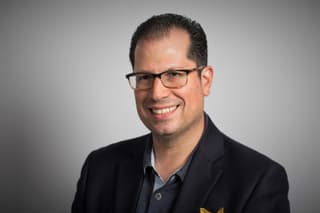
To understand what this means for brands, CommerceIQ spoke with Ricardo Belmar, a retail technology strategist, podcast host, and longtime voice in retail operations. In this Q&A, Ricardo shares where agentic commerce is heading, why personalization still misses the mark, and what skills the next generation of commerce leaders will need.
Q&A with Ricardo Belmar
Q: You've built a strong reputation and audience in the commerce space. Tell us about your background and how you became such a trusted voice in retail.
RB: I’ve spent the past two decades plus in my professional career in retail technology, delivering tech solutions to retailers across North America and Europe. I’ve done this as a product manager, product marketing, demand gen marketer, and in every case, I’ve made a point of learning what each retailer’s operational challenges were and explored ways to help them.
I’ve never worked in sales, and as a result, most retailers I’ve met over the years tell me they always appreciated my engagement with them to better understand their business and their challenges vs “just trying to sell them something.” I also spent time as a frontline store associate during my school years, so I learned first-hand what it was like to work the store sales floor and what the dynamic between stores and corporate felt like. I’ve always been surprised by how many people in tech try to sell solutions to retailers for their store teams without ever having been on the front lines and experiencing the real environment.
Along the way, I decided to leverage my gained knowledge about retail operations and challenges to give back to the industry by sharing not only what I’ve learned but also by providing a vehicle for others in retail to share what they’ve learned. Prior to launching my original podcast, The Retail Razor Show, I did that via speaking engagements at conferences and other corporate events. With the podcast, and as it has grown into a podcast network of four shows, I explore as many aspects of retail technology, leadership skills, operational excellence, and transformational skills as possible by hosting conversations on relevant topics that retailers can learn from. Oftentimes, I try to focus on topics that don’t get enough airtime in the usual media outlets, but that can have a significant impact on how retailers think about technology and their business operations.
Q: What do you think is the biggest shift happening in commerce right now?
RB: No question for me, it’s the intersection of AI and retail media that’s playing out in front of us via agentic commerce. It’s still early days, but it’s clear that agentic commerce in various flavors (and there’s plenty of debate about how this is defined) is becoming an important sales channel for commerce, but at the same time may take revenue away from retail media if retailers don’t learn to adapt to this new medium.
Q: Where do you think brands are making the biggest mistake today without realizing it? What outdated practices are brands still clinging to?
RB: I think brands are still losing the battle on personalization. The gap between what retailers and brands think personalization is delivered and what customers believe they’re receiving is growing, not contracting.
As I speak to more and more operators, I think the problem has been exaggerated by the misuse of technology. There’s still too much leaning into the belief that a demographic is refined enough to deliver personalization, which unfortunately doesn’t work for consumers. To a consumer, personalization only works when it’s done at a scale of one, not many. No consumer thinks they are the same as another, and they see most communication from retailers as being directed at mass numbers rather than just themselves.
My hope is that AI will help close this gap. It’s a matter of scaling solutions with enough compute capability that all the customer data retailers have can be used properly and attributed to the right consumer at the right time.
Q: What's one brand you think is executing exceptionally well right now and why?
RB: It really depends on what specific area we’re talking about, but if I had to pick one overall, I’d say it’s Walmart. They keep growing sales and reaching more customers, and those customers keep coming back. They’re successfully reaching higher-income shoppers than they were before, and that reflects the value of what they can deliver across product categories.
Amazon would be a natural close second. And this is largely due to the amount of resources both of these retailers have to invest in their capabilities and operations. Most retailers don’t have that luxury.
Q: How are you seeing product discovery change among consumers, and how do you think brands should be responding?
RB: AI answer engines are the biggest change to discovery since ecommerce and mobile apps. Consumers are finally getting out of keyword jail and realizing they can just have a conversation about what they want with an AI chatbot, and they’ll get to a narrow choice of products that appeal to them far more easily and quickly than using keyword searches.
Although this still doesn’t measure significantly in terms of sales, retailers should be learning how to make themselves discoverable by these AI tools, so consumers end up landing on their websites rather than competitors. It may not make much difference to the bottom line today, but the retailers that do this effectively now are the ones that will see the most uplift later. This is the type of change that happens slowly at first but then very rapidly. It will be harder for retailers to catch up a year from now than if they invest in this now.
Q: How are you seeing AI change the way brands sell, not just the way shoppers buy? Where's the biggest AI opportunity right now?
RB: I’m seeing more and more retailers develop their own LLM interfaces on their websites and apps for customers to use to shop with them. This is smart and is a good challenge to the big LLM AI vendors. If your customer learns to use your interface first rather than going to ChatGPT, Claude, or Copilot, then you have less risk of those tools sending your customer to a competitor.
The trick is building these tools to deliver real value as perceived by the customer, not just by your operation. But the opportunity is huge. Consider how retailers could use this to promote products that have languished in inventory by finally delivering true recommendations that customers consider valuable. Past recommendation engines haven’t lived up to the promise, so there is potential there.
Q: Are there any commerce trends that you feel are currently overhyped?
RB: We’re living in interesting times. While agentic commerce is the big trend and big transformational force right now, it’s simultaneously overhyped. We keep seeing reports of massive growth in terms of percentages, numbers like 1,000% growth, which sounds massive, but it’s only because we’re working with such small numbers to begin with, so the math works out to huge percentages.
Like I said before, the significance isn’t in the revenue impact a retailer sees now; it’s in the building of trust and the building of habits for customers going forward. That will lead to revenue later. But it requires investment now. As the Gartner hype cycle calls it, we’re hitting peak hype now, and we’re likely to enter a trough of disillusionment soon, but I suspect we won’t stay in that trough for very long.
Q: When you think about the next generation of commerce leaders, what skills or traits do you think will matter most?
RB: It’s all about people skills. We’ve spent years saying retail is becoming a data business, but the reality is it’s still a people business and always will be. That means empathy will be important. Empathy for your customer and your employee.
It means creating an environment that is welcoming to team members and customers. It means expressing a positive mindset and positive accountability. Retail needs more leaders who think this way. Brands like Costco exhibit this today, and it is reflected in their success.
Q: Is there a resource you would recommend (a book, podcast, creator, or publication) that helps you stay informed on the future of retail and ecommerce?
RB: There are so many! I’ve seen what feels like a flood of excellent books written by retail executives over the past year or so. I’ve had many of the authors on The Retail Razor Show and our Retail Transformers show. Books by April Sabral, Ron Thurston, Kevin Ertell, Julie Averill, Matt Marcotte, Kit Campoy, and Jeffrey McNulty; these are just a few. Honestly, there are so many more that I can’t begin to list them all. The key thing is that these are retailers themselves who have lived the experiences, and are sharing what made them successful, and can make future retailers successful. That’s something I try to bring to every episode in my podcast network.
In addition to the Retail Razor Podcast Network, I’d also recommend other indie podcasts like Remarkable Retail, OFFBounds, The CPG Guys, Retail in America, Retail Media Breakfast Club, The Middlemen Podcast, Future Commerce, and Omni Talk, just to name a few. Each of these has a slightly different focus, and I’m sure most don’t have time to listen to them all, but there is a huge amount of value being offered by these authors and these podcasts.