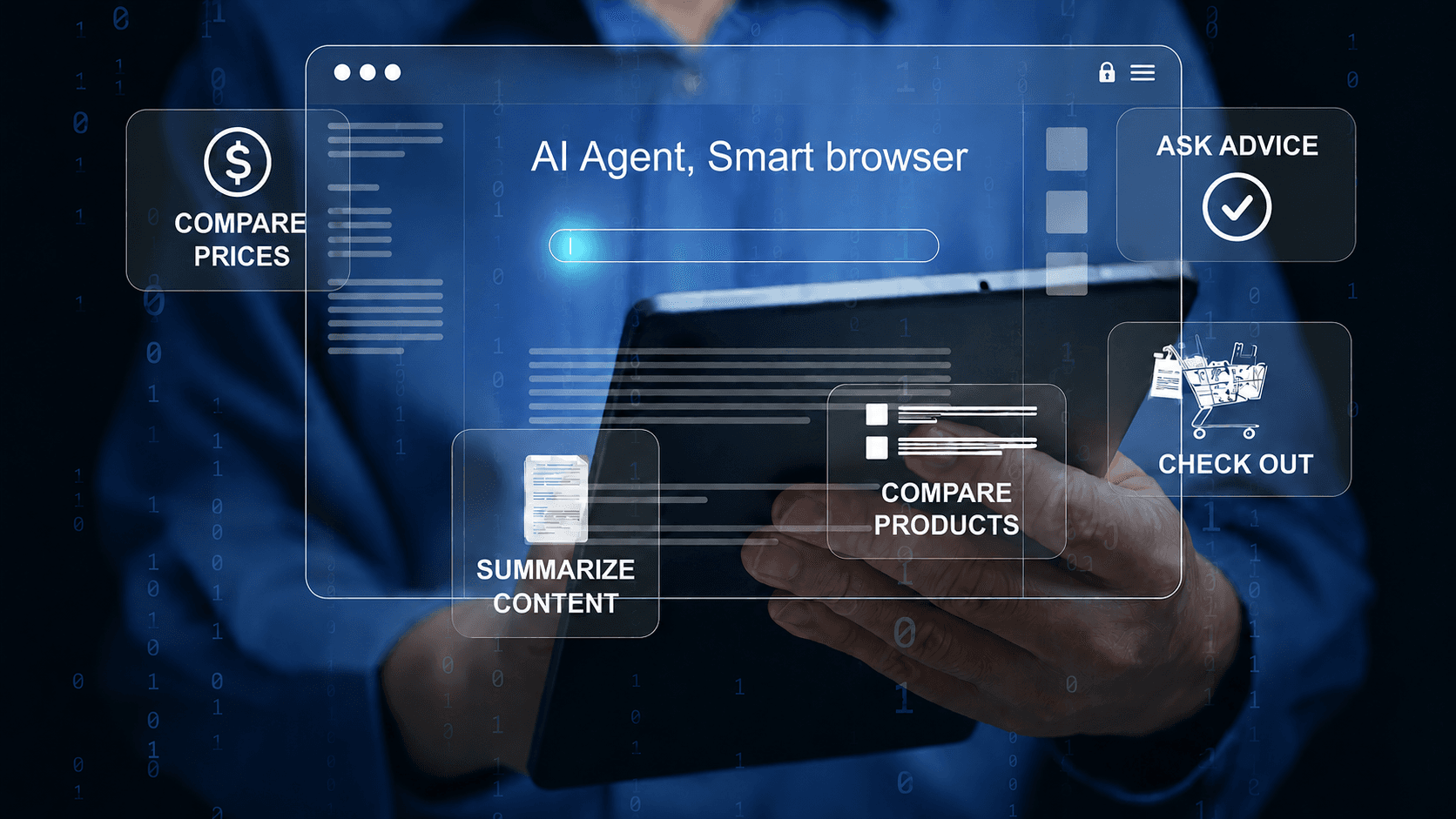
The customer journey is changing as a growing number of shoppers now start their search using AI shopping agents like Amazon's Alexa for Shopping and Walmart's Sparky, or even ChatGPT or Google Gemini.
According to Amazon, monthly active Alexa for Shopping (formerly Rufus) users are up more than 115% year over year, with engagement up nearly 400%. Instead of scrolling through search results and comparing options, shoppers are asking these AI agents to build a shortlist for them, and the agents decide what products make the cut.
Brands still optimizing their product pages for human eyes are being filtered out before a shopper even sees them because their content isn't structured for how an agent reads and ranks it. And with thousands of SKUs and multiple marketplaces to manage, teams making manual updates can't keep up with algorithms that shift in real time.
As agentic commerce grows, brand visibility hinges on keeping content optimized for shopping agents and up to date with the pace of these marketplaces.
Why CPG product pages are losing visibility
AI agents don't read product pages the way search algorithms rank them. Product discovery on Amazon or Walmart used to rely on search algorithms that ranked results based on title keywords, sales history, and ad spend. Listings ranked well when the title was optimized, or the product had high sales, regardless of whether the rest of the page answered a shopper's query.
Now, AI agents evaluate the entire page, making agent optimization, or answer engine optimization (AEO), important for brands that want to continue to be seen by shoppers. For example, when a shopper asks Alexa for Shopping to find "the best dry cat food for a senior indoor cat on a budget," the agent scans descriptions, reviews, ingredient lists, and pricing before generating a recommendation. The response comes back in seconds with a shortlist, before a human shopper would've ever finished scrolling through a traditional search.
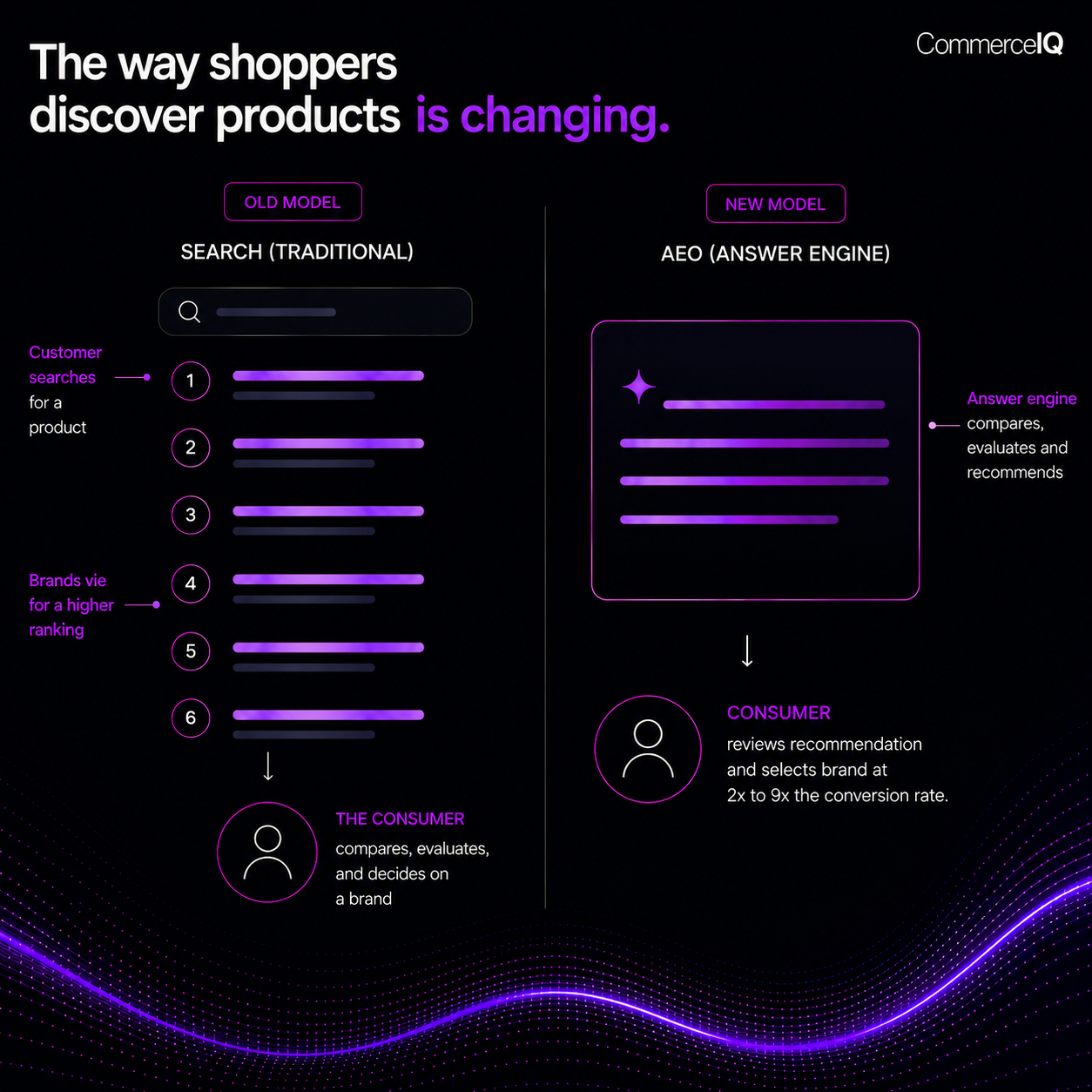
So, while a keyword-optimized title can still rank in traditional search, if the rest of the page doesn't give an agent enough context to understand what the product is, who it's for, and why it's relevant, the shopping agent won't recommend it.
The challenge also lies in optimizing thousands of SKUs across Amazon, Walmart, Target, and every other marketplace where shoppers are using these AI agents. Each marketplace has different content requirements, and those requirements change as algorithms update. This makes it impossible for human teams to keep up manually.
To maintain product visibility, brands need their own agents that speak the same language and operate at the same speed as the AI shopping agents their customers use.
How agentic retail keeps your catalog visible
When a shopper asks an AI agent for a product recommendation, the shortlist that comes back is filled with listings from brands using their own agents to optimize content for the shopping agent evaluating it.
As these same brands continue to be recommended by an agent, shoppers start to trust them more. According to Amazon, nearly 20% of shoppers who interact with a prompt in Alexa for Shopping continue the conversation about that brand. That builds category share and repeat purchases that late adopters will need to spend significantly more to win back.
A content agent reads a product page the same way a shopping agent does, by scanning descriptions, reviews, bullet points, and pricing. It then cross-references that content against trending search terms, marketplace requirements, and the ranking signals each shopping agent weighs when building recommendations. But unlike a shopping agent, it isn't deciding what shoppers see; it's providing brands with suggestions to ensure their products get recommended. When a content agent identifies a listing that's falling short, it generates an update, explains the reasoning, and publishes it once a team member approves.
Newell Brands deployed a content agent to optimize their product detail pages for SEO, AEO, and GEO, which resulted in a 40x improvement in time saved on PDP optimization. That work happens continuously because agent recommendations update as search behavior, competitor content, and marketplace requirements change.
Don't let AI shopping agents filter out your products. See how CommerceIQ's content agent keeps your catalog visible. Book a demo.
Agentic retail will always outperform manual updates
The shift to AI-led product discovery is accelerating, as shoppers skip the search bar and start with a prompt for shopping agents. The brands appearing in their recommendations are gaining category share every day, while those that aren't optimizing for shopping agents are losing visibility.
For CPG brands in 2026 and beyond, it's no longer a question of whether to optimize for agentic commerce over traditional search. To ensure products are recommended by AI shopping agents, brands need to lean into agentic retail. Learn how CommerceIQ can help your brand stay in front of your customers as their shopping behaviors change.