
When media teams review Amazon Ads on a weekly cycle, they're bidding against conditions that changed days earlier. Amazon gave CPG brands a way out of that cycle in February with its ads Model Context Protocol server, or MCP. Now, with Amazon Ads API access, brands can connect an AI agent once through a single integration, allowing the agent to create and manage campaigns and pull reports on demand.
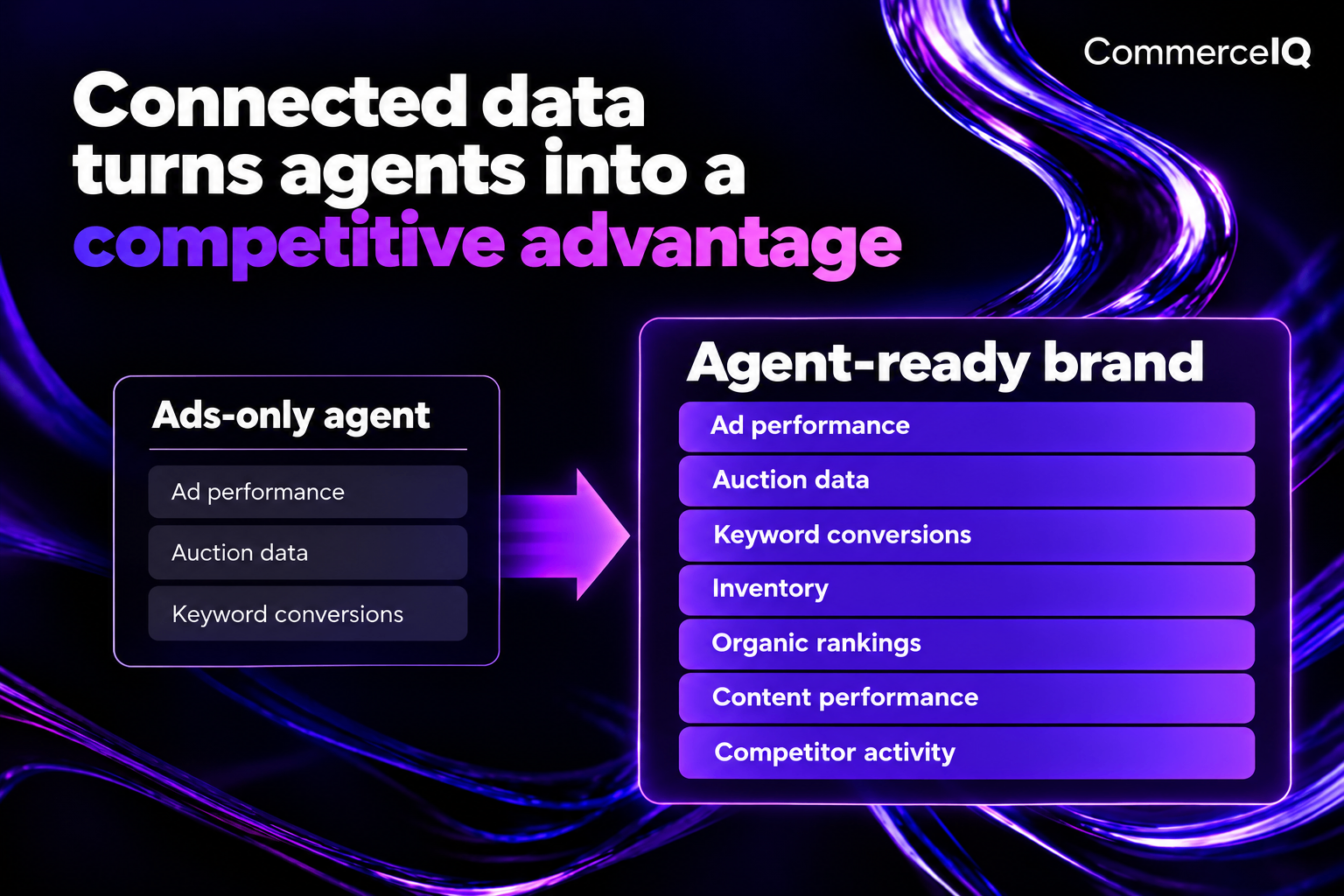
But acting fast is only beneficial when the agent has complete brand context. An agent connected only to advertising data has no visibility into inventory or organic rankings, so it could keep funding SKUs that went out of stock that morning or raise bids on keywords the brand already ranks in the top five for. Those same blind spots can be repeated across thousands of keywords before a team member reviews the changes.
Every brand with API access gets the same connection, so what separates them now is the completeness of data their agents are equipped with before they act. Brands that already have their media, shelf, and sales data working together can give agents the context to spend against current conditions, rather than last week's.
What Amazon's ads MCP server changes for brands
Before MCP, applying one high-performing keyword across an account meant opening each campaign one by one or paying engineers to build an integration to do it automatically. So only brands with the technical resources to fund a custom build could execute at scale. Now, with just one instruction, a media team can apply a high-performing keyword across an entire account because MCP turns plain language into the precise requests Amazon Ads accepts.
But connecting an agent to Amazon Ads is only part of the solution. Amazon's advertising API includes a long list of individual actions, and an agent working through them on its own has to determine how those steps fit together. Amazon addresses this with tools that bundle multi-step workflows into a single action. And while that makes campaign execution faster and more accessible, it doesn't make the decisions behind that execution better.
Amazon Ads can tell an agent what happened in the auction, but not whether a SKU went out of stock or whether a listing is ranking organically for a keyword. Brands that provide agents with access to those signals can ensure their decisions align with what's also happening on the shelf.
Why Amazon Ads can't give agents the data they need to compete
Amazon reports what happens in its own auctions, so an agent working from that data alone can see that a keyword was driving conversions but not that the product it advertises sold out an hour ago. That blind spot can lead the agent to keep putting budget behind conditions that have already changed. Brands need to connect the agent to their own inventory, content, and competitor activity tracking.
When a competitor's promotion ends, the agent can detect the change and launch a DSP campaign targeting shoppers who viewed the competitor's detail page in the past two weeks, this time with the brand's own offer. A Sponsored Product ad can't reach those same shoppers based on their previous product-page visit until they search again.
Amazon's API lets the agent build the campaign, but Amazon's advertising data doesn't tell it that the competitor's promotion just ended. That signal comes from the brand's own tracking, and speed matters. If the campaign launches weeks later, the opportunity could be gone. The advantage comes from connecting the signal to an action while it's still relevant.
The agent can apply the same logic to inventory, organic rankings, and content performance. As those conditions change, it can continuously adjust where to spend. That's what makes the data valuable: a brand tracking its shelf can make better-informed decisions throughout the day than an agent acting without context.
What else agents need before they act autonomously
Not only do agents need connected signals across the shelf, but they also need to execute at the pace of the marketplace. A competitor's promotion can end overnight, and a SKU can sell out before noon. An agent working from a Tuesday export acts based on Tuesday's conditions. But with current signals, the agent can adjust as conditions change.
Brands also need to decide what agents should handle on their own. Spend ceilings, approval thresholds, and changes requiring human sign-off give the agent clear boundaries for autonomous execution.
Connected data tells the agent what's happening in real time, and guardrails define what it can do about it without authorization. Both are necessary for an agent to act autonomously within the brand's rules.
How brands can become truly agent-ready for Amazon Ads
Any brand with API access can connect an agent to Amazon Ads, making the integration itself less of a competitive edge. The connection alone lets agents optimize bids and campaigns, but without the context needed to make those decisions, it can lead to wasted budget and lost time. The advantage comes from giving agents access to signals that go beyond ads, from inventory to organic rankings, so each action becomes more precise.
An agentic retail platform like CommerceIQ brings those signals together so agents can adjust execution in real time based on what's happening across the marketplace.
What is an agentic retail platform? It’s an advanced e-commerce software system powered by autonomous AI agents that walks customers through the product discovery process and automates complex merchant workflows. That's the difference between connecting an agent and equipping one. Brands that close this gap won't just keep pace with the marketplace, they'll act ahead of it.