CPG brands only have a few weeks left to plan for Q4, and Amazon's first half of 2026 changed what they're preparing for. Shoppers now describe what they need to Alexa for Shopping, choose from a shortlist, and have it delivered within minutes.
This holiday season, brands can't prepare based on last year's playbook. They'll end up optimizing product pages for search rankings while shoppers rely on shopping agents for recommendations; they'll put media dollars behind placements that deliver diminishing returns; and they'll track national inventory without seeing the local stockouts that can take products out of contention for Amazon Now delivery. Brands need to account for the shifts that have already shaped shopping in 2026 and build their holiday season strategy around how shoppers will discover and convert during Q4.
What did the first half of 2026 reveal about how shoppers now buy on Amazon?
During Q1 and Q2, shoppers bought from brands Alexa for Shopping recommended and favored those that could deliver within the shortest window. These first-half results show where demand is headed, giving brands a playbook for the holidays.
Shoppers started with Alexa for Shopping, not traditional search
Over 350 million shoppers used Alexa for Shopping in the past year, describing what they need to the AI shopping agent and receiving a shortlist of products in return.
Amazon reported interactions up more than 5x, with active users nearly doubling in a single quarter, which means a larger share of holiday traffic will come through Alexa for Shopping this year compared to last. Brands that leave their pages unoptimized for AEO will lose category demand because they become essentially invisible to shoppers when they're left off agent shortlists.
Shoppers using Alexa for Shopping spent more
Shoppers who used Alexa for Shopping spent over 40% more per order than those who didn't, making them a particularly valuable shopper segment. As CPCs rise and margins tighten, reaching shoppers who spend more per transaction can generate more value than simply driving more traffic to a listing. But Alexa for Shopping makes recommendations based on product-page content, so the agent needs sufficient information to recommend confidently.
Shoppers wanted products delivered within minutes
According to Amazon’s second-quarter results, Amazon Now, Amazon's 30-minute delivery service, grew sales and units more than 80% quarter over quarter, served over 60% more customers, and added 80 US cities in a single quarter.
Amazon Now grew fastest in everyday essentials like groceries, household items, and personal care, where an order that used to take several days to deliver can now arrive within minutes of purchase.
The products available through Amazon Now have to be in stock nearby. Because shoppers use Amazon Now to purchase everyday categories, winning the sale could also lead to repeat orders. But if the brand loses the conversion, they might not get another chance to get in front of the shopper.
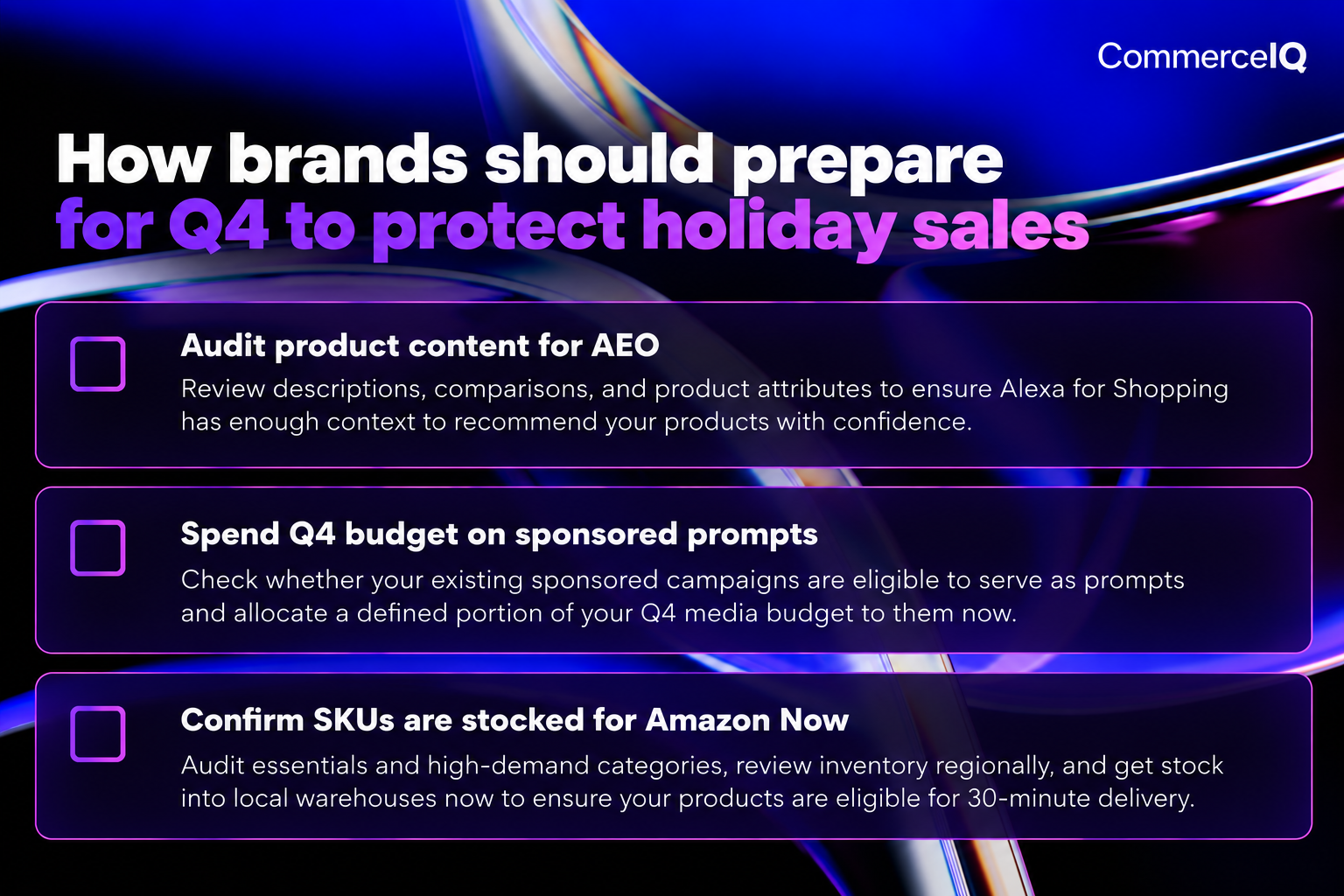
How brands should prepare for Q4 to protect holiday sales
Shoppers now find products through an agent, spend more when they do, and expect delivery within the hour. Brands that enter Q4 without preparing for how shoppers now buy will lose sales to competitors during the highest-volume weeks of the year.
Audit product content for AEO
Brands need to audit descriptions, comparisons, and product attributes to determine whether an agent has enough context to recommend them confidently. Once the agent recommends a product and shoppers leave reviews, the agent factors customer sentiment into its next recommendation. This early engagement feeds the virtuous cycle of AEO recommendations, compounding brand advantage over time.
Spend Q4 budget on sponsored prompts
Sponsored prompts appear in a shopper's conversation with Alexa for Shopping after the shopper has described what they want. Shoppers who click on a sponsored prompt convert 48% more often and spend 21% more than shoppers who don't, because the prompt appears at the point where they've named exactly what they need. Nearly 20% of shoppers who click a sponsored prompt keep asking Alexa for Shopping about that brand, so there are several more chances to be recommended in the same conversation.
Brands need to check whether their existing sponsored campaigns are eligible to serve as prompts and allocate a defined portion of Q4 media budget to them now, while prompts are less contested than they will be at peak.
Confirm SKUs are stocked for Amazon Now
To qualify for Amazon Now, brands should start by auditing essentials and hosting categories that peak during the holidays. That requires looking at inventory regionally, since national stock levels can look healthy even when the warehouses serving a given city are out of product. Without inventory nearby, shoppers in that market can't order the product for 30-minute delivery.
Meanwhile, inventory must be physically in Amazon's fulfillment network before a shopper can order it, and brands can only influence the timeline up to the point of shipment. Once a shipment arrives, Amazon controls the receiving and fulfillment process. Freight shipments can take up to 19 days for Amazon to receive, followed by up to 18 more days for units to reach the fulfillment centers closest to customers. Amazon's processing times are longer during peak season, so brands need to ship as early as possible to ensure inventory is on the shelf when traffic hits.
Brands also need sufficient inventory to sustain the full Cyber 5 event, since a stockout will result in removal from the shortlists the agent builds. Getting recommended again after the season's biggest shopping days won't make up for the sales lost during the surge.
The first half of the year set the 2026 holiday playbook
In the first half of 2026, Alexa for Shopping became a mainstream discovery surface, basket sizes grew for customers checking out with the AI shopping agent, and the expected delivery speed became exponentially faster. Brands heading into Q4 with the same approach they used during last year's holiday season are operating around a customer journey that no longer exists.
Applying the biggest lessons of 2026 so far means brands need to audit content, allocate more budget toward prompts, and confirm regional stock before the most important quarter of the year begins. An agentic retail platform like CommerceIQ unifies shelf conditions with media efforts and keeps content optimized as the shopping agent's criteria change, so brands can maintain their placement on the shortlists that reach shoppers throughout the holiday season.