Prime Day 2026 set a spending record: U.S. shoppers spent $26.4 billion over the event, up 9.3% year over year. We also saw that traffic dropped while conversion jumped by double digits. Unit volume still grew because the shoppers who showed up were already close to making a purchase. It's the ability to convert existing demand that sets winning brands apart, an important lesson for Q4 strategy.
Part of the shift came from the continued rise of Alexa for Shopping. More shoppers asked it what to buy instead of searching for it themselves. Alexa returned a short list for each query, and shoppers bought from that list almost exclusively. If a brand wasn't on it, the sale was gone before the shopper ever saw the product page.
Brands couldn't buy their way back into the minds of shoppers who had already decided, and those that cut prices to compete gave up margin without necessarily winning the sale. The brands that gained share had their listings and pricing correct before the event began, and kept them competitive across the four days as conditions changed by the minute.
What Prime Day 2026 data revealed about how brands gained and lost share
Our four-day data shows that split clearly. Fewer shoppers searched and more let Alexa for Shopping choose for them.
Shoppers browsed less yet bought more
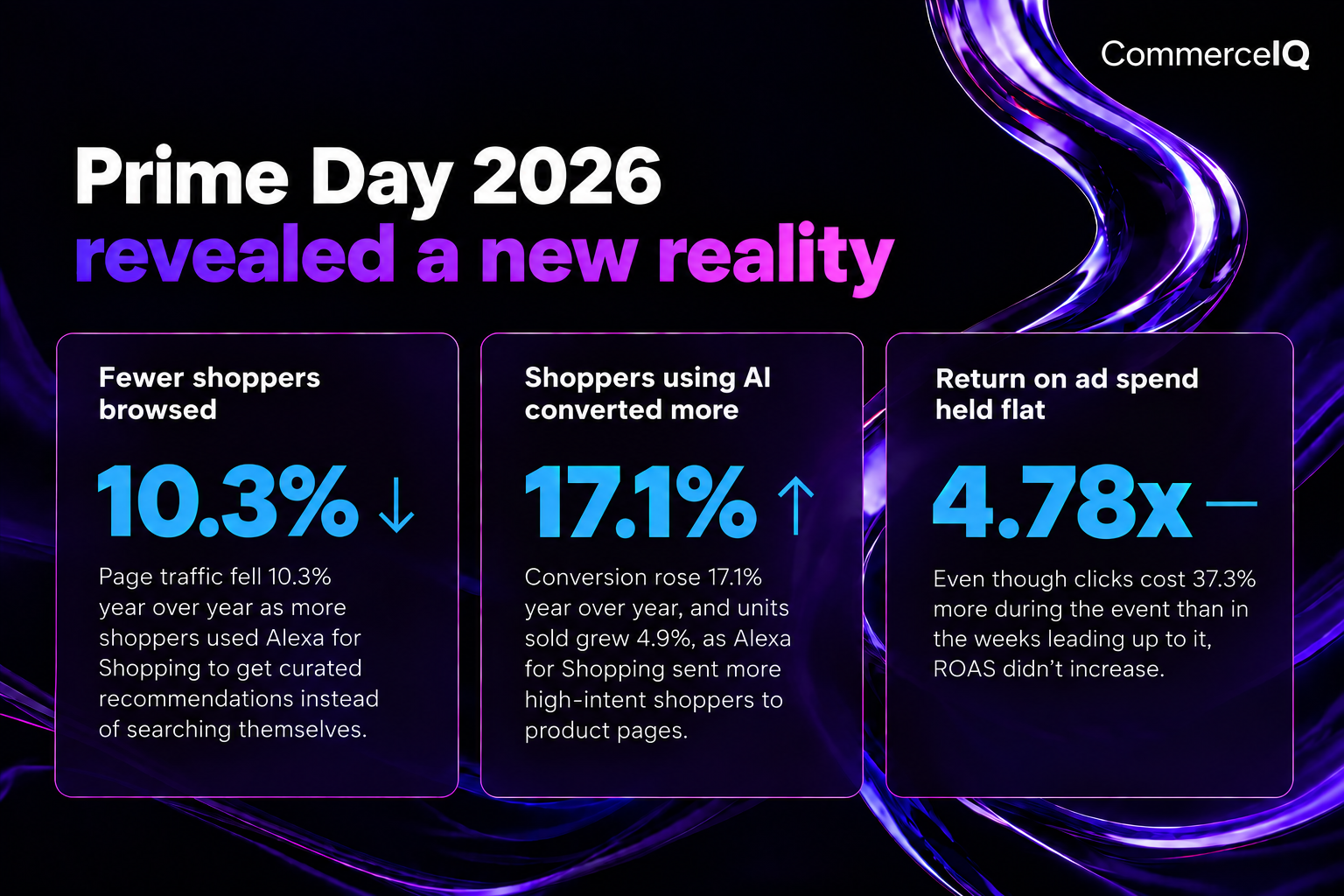
Fewer shoppers reached each product page this Prime Day, but the ones who did were more likely to convert. Page traffic fell 10.3% year over year, yet conversion rose 17.1%, helping units sold grow 4.9%. That's Alexa for Shopping at work. It evaluates a listing's content to decide whether to shortlist it, then filters out casual browsers before they ever reach a product page, passing through mostly shoppers who are ready to buy. Brands with thin content or out-of-stock SKUs don't make that shortlist.
Reallocated media spend didn't improve returns
Brands cut ad spend 8.8% year over year and concentrated what remained. 88% went to Sponsored Products, as brands pulled back sharply from Sponsored Display (down 70%) and Sponsored Brands (down 25%). CPC went up 37.3% compared to the weeks before the event, yet ROAS held flat at 4.78x.
That flat line is easy to misread as ad spend keeping pace with cost. It didn't. When every advertiser raises bids at once, CPCs inflate and efficiency compresses, so holding ROAS steady while paying more per click means more of that spend went to sales brands would have made anyway, which ROAS still counts. The number that actually shows whether pricier clicks bought new demand, or just paid more for sales brands already had, is incremental ROAS, or iROAS. Tracking iROAS by placement through the event is what tells a brand which placements to defend going into Q4.
Stockouts got more expensive
Brands struggled to keep products in stock throughout the event. Revenue lost to out-of-stock SKUs rose 173% year over year, with losses on all four days and the worst hit on Day 4. It also compounded the media problem described above. Amazon pauses Sponsored Products ads on an out-of-stock listing but keeps serving Sponsored Brands and DSP ads for it, so brands paid full price for awareness ads pointing shoppers at a page they couldn't buy from. Discounts and ad spend can't convert what isn't on the shelf.
What separated the brands that gained share on Prime Day 2026, and what we can learn for Q4
The brands that won ran tight operations. Inventory was available, content was well-structured and visible in search, pricing was competitive enough to keep the Buy Box, and they invested in media at the right times before, during, and after the event. Those fundamentals were what won Alexa for Shopping recommendations, along with rich content answering who, what, when, where, why, and how, the details that capture long-tail queries.
The brands that lost share had the same weaknesses throughout and no way to fix them mid-event. A competitor's lower price took the Buy Box within minutes, and a listing that went out of stock or was missing a key detail stayed that way until someone noticed. Alexa for Shopping built its recommendations based on what each listing showed at that moment, so brands that let those conditions slip dropped off the shortlist while the event was still going.
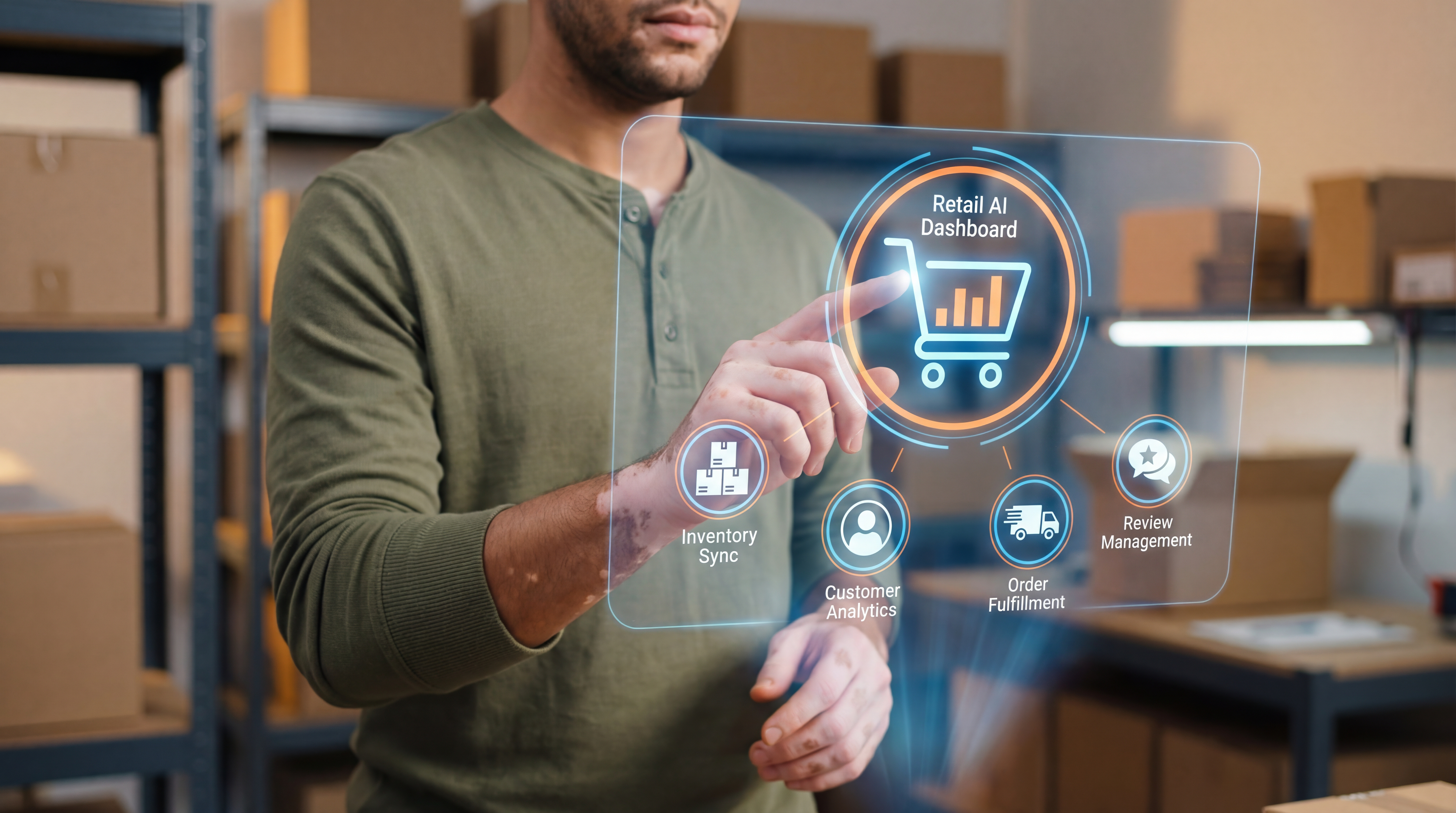
Brands that converted best this Prime Day solved that timing problem by using AI agents to monitor inventory, content, pricing, and media across the full catalog, then recommend and execute changes with human oversight, at the new pace of agentic commerce.
The brands earning Alexa for Shopping recommendations are taking share, and doing so at a lower cost
Shoppers remained cautious this Prime Day, spending on necessities and small indulgences in categories like health and beauty while forgoing bigger purchases such as furniture. That caution will only continue as geopolitical issues and economic pressures keep driving up prices at the gas pump and the grocery store.
Since traffic isn't growing, the best way for brands to gain market share is to take it from competitors by earning Alexa for Shopping recommendations. An agentic retail platform like CommerceIQ can help brands stay on the shopping agents' shortlist as conditions on Amazon continue to change.